
Water Heaters Repaired and Replaced
Water heater replacement is the job we handle more than any other in Mason, and the original tanks in many local houses are reaching the end of their run.
Many of the houses in Mason went up in the 1990s and 2000s, and their original water heaters are now at the age when they leak or stop heating, often with little warning. When it’s time for a new one, we size, vent and connect each new tank or tankless unit, then haul the old one away. When a part has failed on a tank that still has life in it, a repair can be the better call.
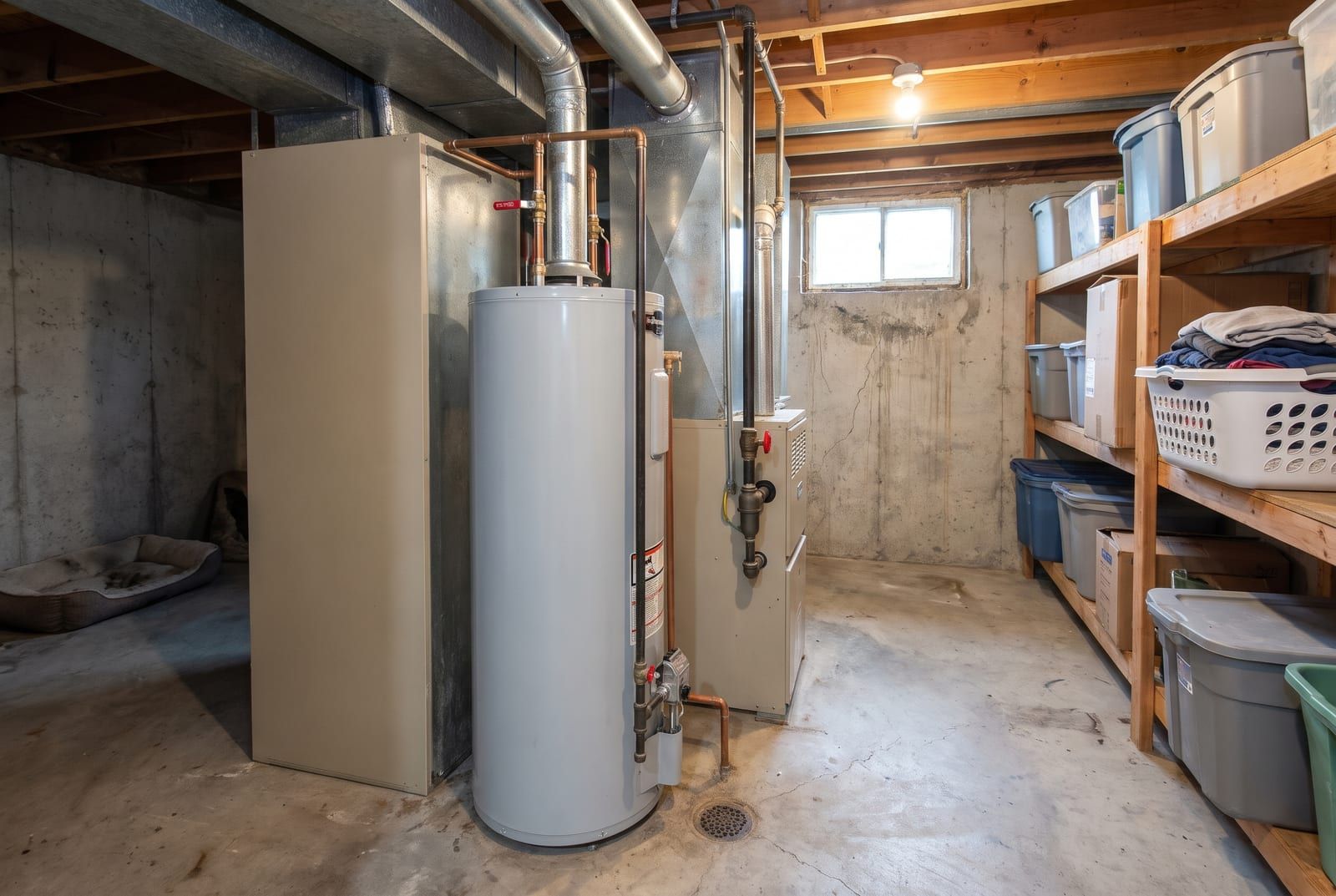
Signs Your Water Heater Is Wearing Out
- Water on the floor around the base, or a rusty ring where the tank sits.
- Rusty or brown hot water while the cold water runs clear.
- Rumbling, popping or knocking while the burner or elements are on.
- Hot water that runs out much sooner than it used to.
- A pilot that keeps going out, or a breaker that keeps tripping on an electric heater.
- A label showing the tank is well past ten years old.
Tank, Tankless or Heat Pump
Most Mason basements and garages hold a gas or electric tank, but it isn’t the only option when the old one goes.
| Type | How it works | Things to weigh |
|---|---|---|
| Tank | Keeps 30 to 80 gallons hot and ready, heated by a gas burner or electric elements | The most familiar setup and the simplest swap for an old tank; it can run out during back-to-back showers and keeps losing a little heat while it sits waiting |
| Tankless | Heats water only as it flows through, so there is no stored supply to run out | Endless hot water at a set flow rate; a gas unit needs the right gas line size and its own venting, and hard water calls for regular descaling |
| Heat pump | An electric tank that pulls heat from the surrounding air to warm the water | Uses far less electricity than a standard electric tank; it needs room around it, cools the space it sits in and has a condensate line to drain |
Water Heater Sizing Guide
A rough starting point for a tank’s size, based on the people and bathrooms in the house.
Choose the number of people and bathrooms, then press the button.
These ranges are general. The heater’s first-hour rating, gas or electric, a large soaking tub and how many showers run back to back all change the right size, which is why a heater is sized at the house.
Repair or Replace?
A thermostat, heating element, gas control, igniter or relief valve can be replaced on a tank that is otherwise sound. A tank leaking from its body cannot be repaired, because the steel inside has rusted through. Age matters too: putting a new part on a tank near the end of its life often just buys a few months.
Water Heater Questions
How long does a tank water heater usually last?
Many tanks give around 8 to 12 years, depending on the water, how hard the heater works and whether it was ever flushed. Plenty of the tanks in Mason’s 1990s and 2000s houses are past that point, which is why they start leaking or quitting with little warning.
My relief valve is dripping. Is that dangerous?
The temperature and pressure relief valve opens when the tank gets too hot or the pressure climbs too high. A drip can mean the valve is worn, or that the pressure in the house is too high. Don’t cap or plug it; have it looked at.
Should I switch to tankless?
It depends on how your household uses hot water, the gas line you have and where a vent can run. A tankless unit suits a family that runs out of hot water often. For a straight swap with the fewest changes, a new tank is usually simpler.
Does flushing a water heater help?
Draining a few gallons from the bottom of the tank once a year clears out sediment that makes the burner or elements work harder and causes the rumbling you sometimes hear. On a tank that has never been flushed in many years, it’s best left to a plumber, since an old drain valve can stick open.
What happens to the old water heater?
We haul the old one away when we put in the new tank or tankless unit, so you are not left with it in the basement or the garage.
No Hot Water, or Water on the Floor?
Let us know the age on the label and what it’s doing, and we’ll take a look at the heater.