Faucets, Toilets, Sinks and Disposals
Most fixture problems come down to a worn part inside, and knowing when a part is enough and when the fixture should go saves time and water.
A dripping faucet, a toilet that runs all night or a disposal that hums and does nothing are some of the most common calls a plumber gets. Many of them are fixed with a new cartridge, flapper or fill valve. Others are a sign the fixture is worn out, and a new one makes more sense than another repair. We fix leaking faucets and running toilets, and we replace garbage disposals, sinks and other fixtures when the old one has had its day.
Repair or Replace, Fixture by Fixture
| Fixture | Common problems | Repair or replace considerations |
|---|---|---|
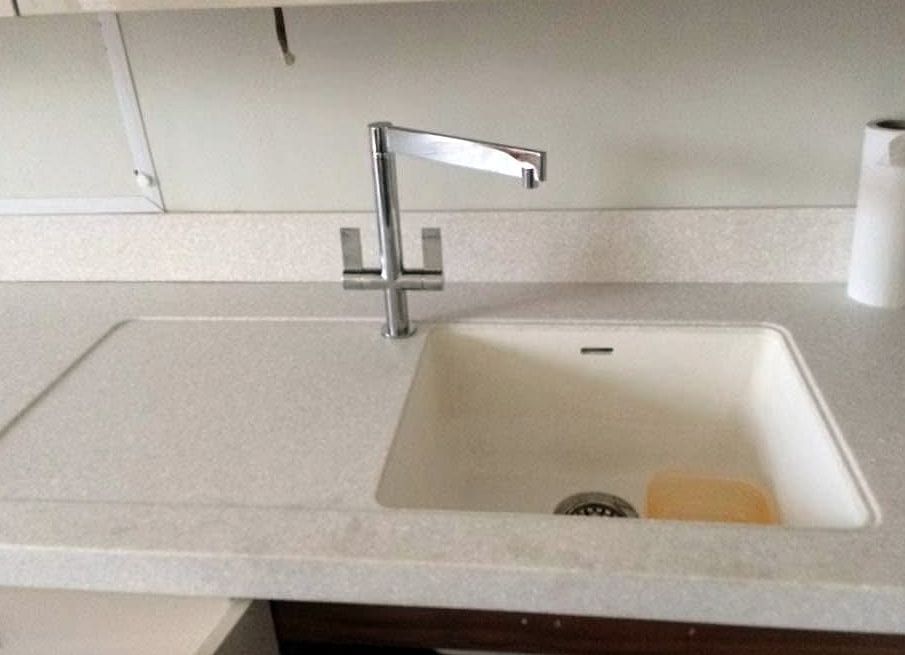
| Faucet | Drips from the spout, leaks at the handle, low flow, a loose base | A new cartridge or washer fixes most drips; a corroded body, a cracked base or a finish you no longer like points to a new faucet |
| Toilet | Runs on and off, rocks, leaks at the base, weak or double flushes | Fill valves and flappers are routine repairs; a cracked bowl or tank, or a toilet that clogs every week, is worth replacing |
| Sink | A slow drain, a leak at the trap or drain basket, chips in the finish | Traps and drain baskets can be replaced; a chipped or cracked bowl means a new sink |
| Shower and tub valve | Drips from the showerhead, water that won’t get hot, a stiff handle | A new cartridge often fixes it; an old valve with no parts available may need replacing behind the wall |
| Garbage disposal | Hums but won’t turn, leaks underneath, trips its reset button | A jam can be freed; a disposal leaking from its body has reached the end and gets replaced |
Toilets That Run, Rock or Leak
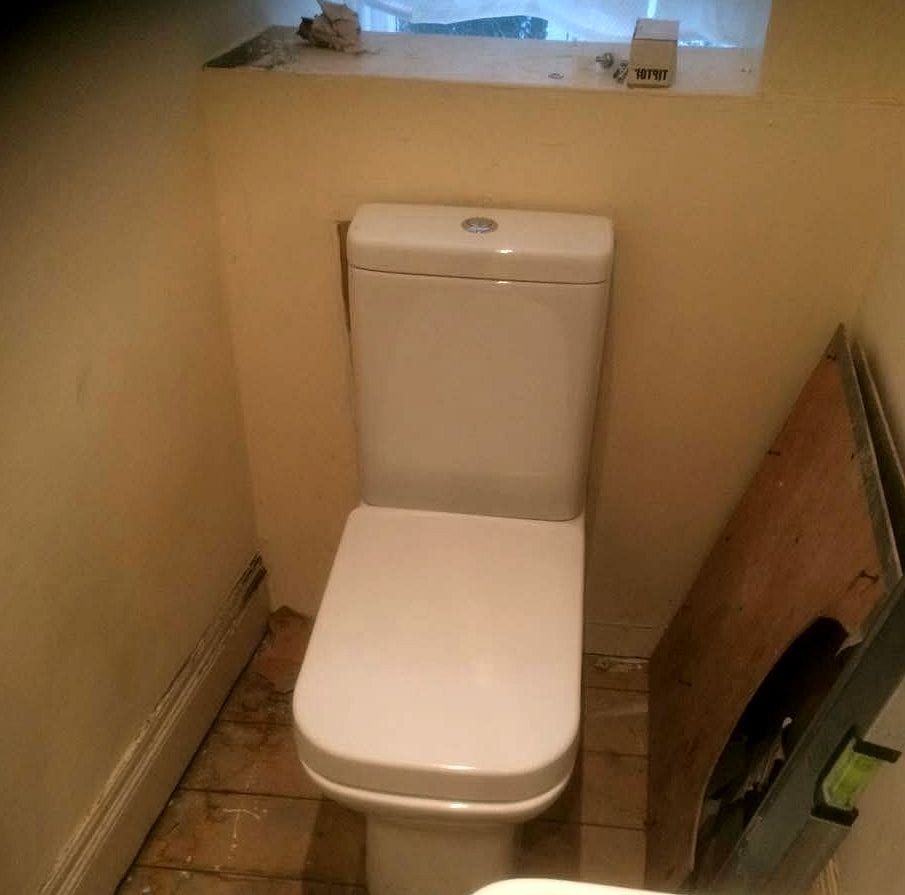
A running toilet is almost always the flapper or the fill valve, and both are quick to replace. A toilet that rocks or leaks at the base needs more care: the wax ring under it has failed, and water may have been reaching the subfloor each time it flushed. Pulling the toilet, checking the flange and floor, and resetting it on a new ring stops it.
When a toilet is cracked, clogs constantly or simply can’t be made to stop running, a new one is the better choice. In a small half bath, a compact elongated bowl can fit where an old one crowded the door.
Have Ready When You Call
- The make and model, if you know them. They are often printed under the sink, inside the toilet tank lid or on the disposal’s label.
- What it does or doesn’t do: drips, runs, leaks, hums, won’t shut off.
- Whether the stop valve under it still turns.
- A photo of the fixture and the pipes under it, which you can email us.
Fixture Questions
Why does my toilet run on its own every so often?
That is usually water leaking slowly from the tank into the bowl past a worn flapper, until the fill valve tops the tank up again. A few drops of food coloring in the tank will show up in the bowl within half an hour if the flapper is leaking.
Is a dripping faucet worth fixing?
Yes. A steady drip wastes a surprising amount of water over a month, and the worn part only gets worse. On most single-handle faucets a new cartridge stops it.
Why is water seeping out around the base of my faucet?
On a single-handle faucet that usually means a worn O-ring or cartridge seal inside the body. It can also be the supply line connection underneath letting water creep up. Close the stop valves under the sink until it is repaired, so water does not soak into the cabinet.
My disposal hums but doesn’t turn. What now?
Switch it off first. Many disposals have a hex socket on the bottom for freeing a jam and a red reset button. If it still hums once the jam is out, the motor or switch may be failing.
Drip, Run or Leak?
Tell us which fixture and what it’s doing, and add the make and model if you have it.