
Our Approach to Plumbing Work
Every plumbing repair starts with finding where the water is coming from and what sits behind it, then working within the safety and code rules that apply.
Jerry Laux learned plumbing by running copper supply lines in new houses, before the walls were closed in. That is why our approach starts behind the fixture: at the house we look at the fixture and the pipes behind it before touching anything, then explain what we found and what the repair involves.
The rest of this page sets out, in general terms, how different plumbing problems are looked at, which safety and code rules come into play, and which jobs usually need a permit. It applies to homes, condos, rental houses and small shops alike.
How a Plumbing Problem Is Assessed
| Job type | What is checked first | Why it matters |
|---|---|---|
| Water heater | The label’s age and size, where the water is coming from (the tank, the relief valve or a fitting above it), the gas supply or breaker, and the vent | A tank that leaks from its body can’t be repaired, while a failed thermostat, element or gas control usually can |
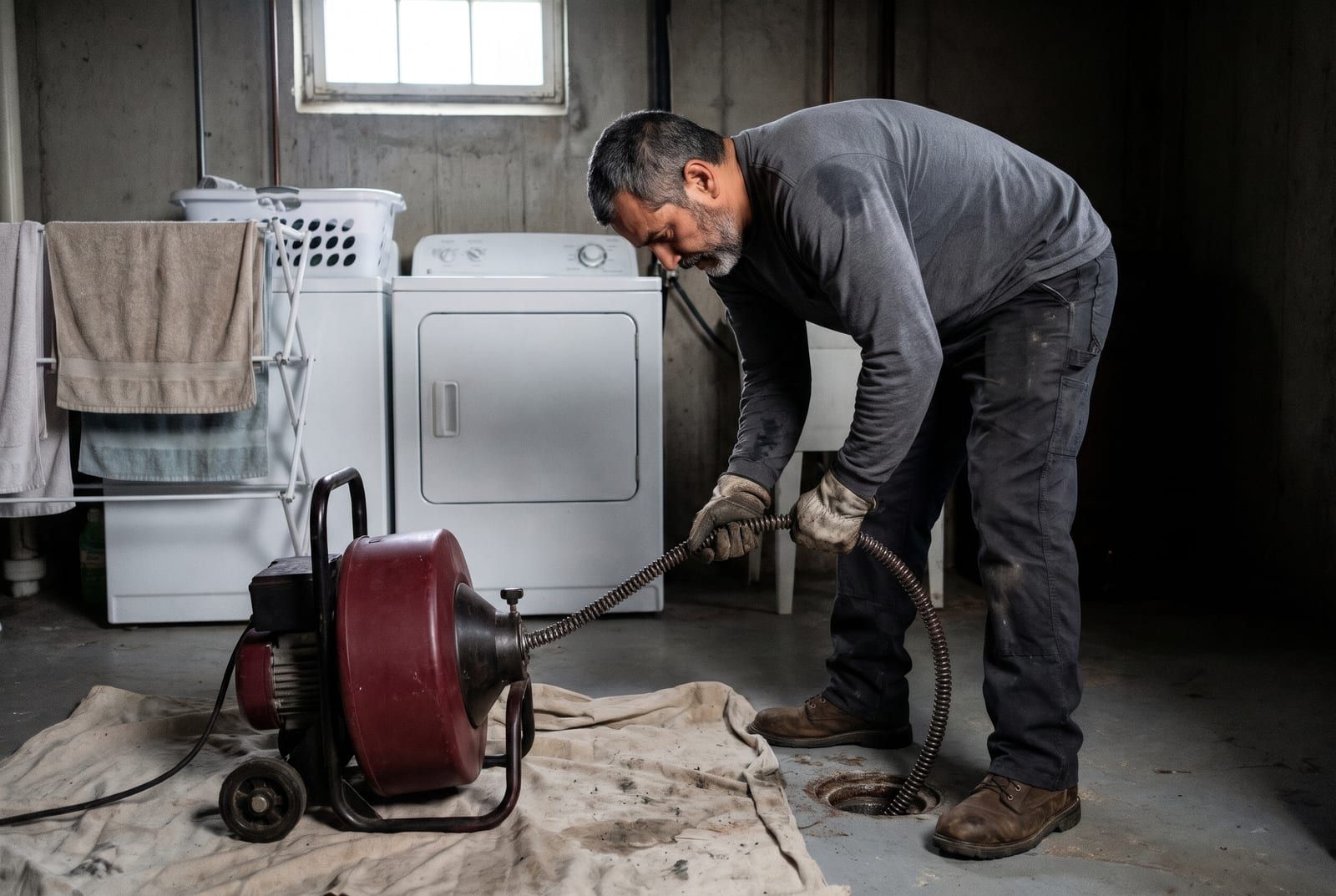
| Slow or clogged drain | Whether one fixture is slow or several are, then the trap and the branch line it feeds | Several slow drains at once point to the main line, not the sink in front of you |
| Leak or damp spot | Where the water shows, the pipe above or behind it, and whether the nearest shutoff works | Water runs along joists and pipes before it drips, so a stain is often a few feet from the leak |
| Running toilet or dripping faucet | The fill valve, flapper or cartridge, and the supply line and stop under it | Worn inner parts can often be replaced without changing the whole fixture |
| Sewage smell or backup | The lowest drains in the house, the cleanout, and any history of backups or roots | A camera look at the line shows a root, a sag or a break before anyone digs |
| Sump pump | The float, the check valve and where the discharge line ends up | A stuck float or a failed check valve is a common reason a basement gets wet in a storm |
Safety and Code Rules
Plumbing touches drinking water, sewage and, with gas water heaters, fuel and exhaust. These are the rules that come up most on house calls.
| Rule | Where it applies | What it protects against |
|---|---|---|
| Water and gas shut-off | Before work on supply lines, fixtures or a gas water heater | Flooding, scalding water and gas escaping while a line is open |
| Permits through the local building department | Water heater replacement, repiping, new or moved fixtures and sewer line repairs, as local rules require | Work that no one outside the job ever checks, and trouble later with insurance or a house sale |
| Water heater relief valves and venting | Every tank water heater, and the venting of every gas unit, tank or tankless | A tank building too much pressure, and exhaust gases such as carbon monoxide staying in the house |
| Backflow prevention | Hose connections, lawn sprinklers, boilers and some commercial fixtures | Dirty water being drawn back into the drinking water lines |
| Calling 811 before digging | Any dig for a sewer line, water line or cleanout | Hitting buried gas, electric and cable lines |
Signs a Job Needs a Permit
Local rules decide what needs a permit, and they are not the same everywhere. These jobs usually do:
- Replacing a water heater, gas or electric, tank or tankless.
- Adding a new fixture or moving one to a different spot.
- Repiping a section of the house with new supply or drain lines.
- Replacing or repairing a sewer line or the water service line from the street.
- Changing the layout of drain and vent piping during a remodel.
- Running or extending a gas line to an appliance.
Swapping a faucet cartridge, clearing a clog or replacing a toilet flapper normally does not.
Questions About Codes and Permits
Who applies for the permit?
On most jobs the plumber doing the work applies for it, because the permit and the inspection are tied to that work. The inspector looks at the finished job and signs off on it.
Does replacing a water heater really need a permit?
In many Ohio communities it does, because a new heater means new gas, water and vent connections and a relief valve that has to be piped correctly. Rules differ from one building department to the next, so the office that covers your address has the final word.
Why does the vent on a gas water heater matter so much?
The vent carries combustion gases, including carbon monoxide, out of the house. A vent that is the wrong size, pitched the wrong way or disconnected can let those gases spill into the basement, which is why it gets checked on every gas unit.
What happens when someone calls 811?
The call notifies the utilities, and each one sends a crew to mark its buried lines with paint or flags before the dig. With the lines marked, a sewer or water line can be dug up without hitting gas or electric lines.
The Service Pages
Each service page explains the warning signs, the usual causes and what a repair involves for that kind of work.
Water Heaters
Tank and tankless units repaired, sized and replaced.
Learn More about Water HeatersDrain Cleaning
Slow sinks, tubs and floor drains cleared at the clog.
Learn More about Drain CleaningLeak Repair
Visible and hidden leaks found and the pipe put right.
Learn More about Leak RepairFaucets and Fixtures
Faucets, toilets, sinks, showers and disposals fixed or replaced.
Learn More about Faucets and FixturesSewer Lines
Camera inspections and repairs on the main sewer line.
Learn More about Sewer LinesWant Us to Look at It?
Tell us where the water is showing up and how long it has been going on, and we’ll take it from there.